
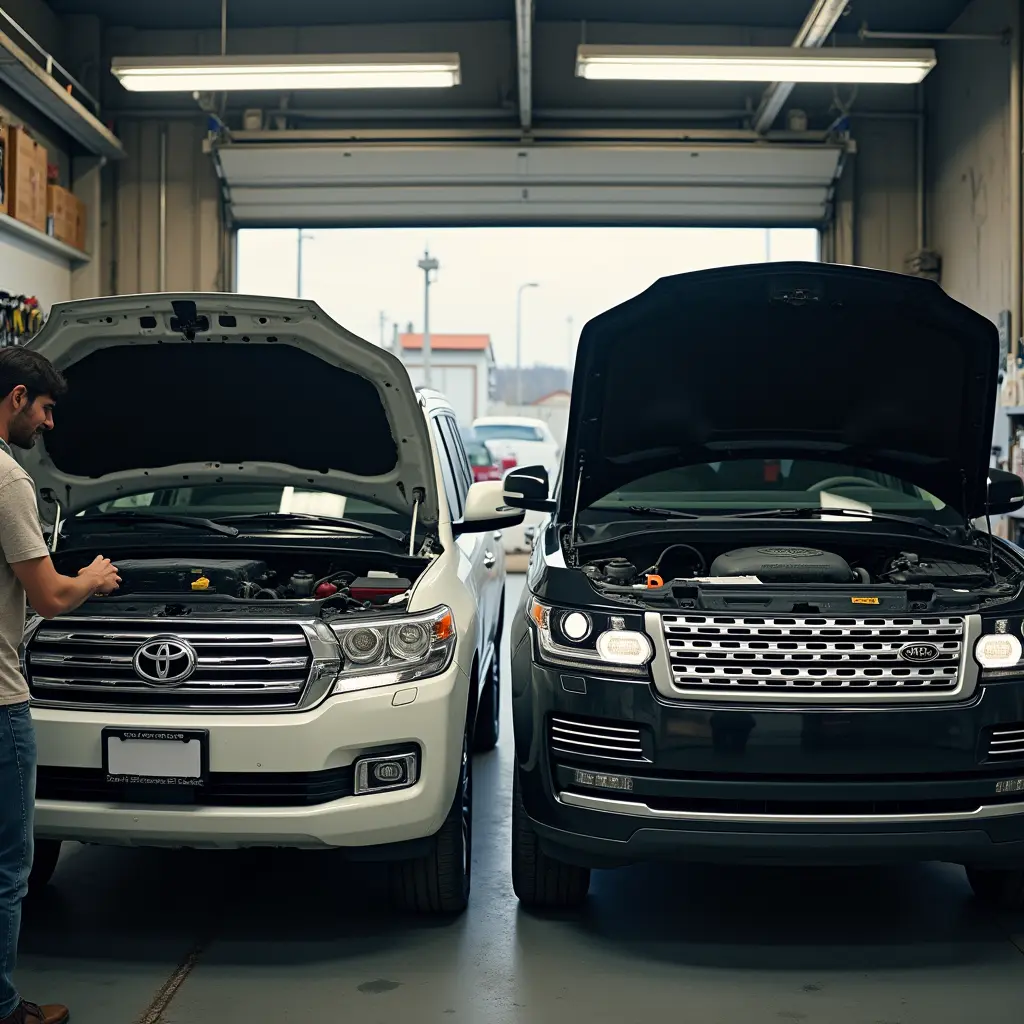
What mileage is good for a used car? Short answer: 12,000 to 15,000 miles a year. That’s the U.S. average, and it’s where I start whenever I look at a used car.
But here’s the thing. That number is a starting point, not a verdict. A car with 100,000 miles that’s been maintained can be a better buy than one with 50,000 that’s been ignored. And a car with 30,000 miles that sat for years can have its own problems.
So what should you actually look for? Check the miles per year, read the service records, and get it inspected. Do those three things and you’ll know more than any odometer reading will tell you.
Let me walk you through how I judge mileage when I’m the one buying.
Table of Contents
What Mileage Is Good for a Used Car?
Divide the miles by the car’s age. That gives you miles per year, and it tells you more than the odometer alone.
Say you’re looking at a 6-year-old car with 84,000 miles. That’s 14,000 a year. Nothing about that worries me.
Now say it’s a 6-year-old car with 25,000 miles. Sounds great, right? Maybe. But I’d ask why it was driven so little. Was it someone’s second car? Did it sit for two years? Was it only used for trips to the corner store? A car that never warms up properly wears faster in some ways than one that gets driven regularly.
Flip it around. A 6-year-old car with 120,000 miles has been driven hard. That doesn’t make it bad. It just means I want to know how those miles got there.
Here’s a rough guide:
| Car’s age | Normal miles (12,000–15,000/yr) |
|---|---|
| 3 years | 36,000–45,000 miles |
| 5 years | 60,000–75,000 miles |
| 7 years | 84,000–105,000 miles |
| 10 years | 120,000–150,000 miles |
Use those as a reference point. Not a cutoff. Consumer Reports says the same thing, by the way. There’s no age-versus-mileage rule that works for every car. What matters is the records and the condition.
If a car falls outside those numbers, ask why. Don’t cross it off the list yet.
Is 100,000 Miles Too Much for a Used Car?
No. Not by itself. That number scared people back when engines were lucky to see 100,000. Things changed. Plenty of cars run past 200,000 now if someone took care of them.
The real question isn’t “does it have 100,000 miles?” It’s “what’s been done in those 100,000 miles?”
Around that mark, a lot of scheduled work comes due. Depending on the car, that list can include:
- Timing belt
- Spark plugs
- Transmission fluid
- Coolant
- Water pump
- Brakes
- Suspension parts
- Belts and hoses
- Tires
- Battery
Not every car needs all of that at the same time. Check the maintenance schedule for the exact year, engine, and transmission you’re looking at. That’s the only list that counts.
One thing people miss: if the seller just did a bunch of that work, that’s worth something. I’d rather buy a 105,000-mile car with fresh maintenance than a 90,000-mile car with all of it still ahead of me.
At 150,000 or 200,000 miles, everything hinges on inspection. Engine, transmission, cooling system, suspension, steering, brakes. And I’d want to know what the last owner already replaced, because that tells me what I won’t have to pay for.
High mileage isn’t the problem. Not knowing what shape the car is in is the problem.
Low Mileage vs. High Mileage: Which Is Better?
Neither one wins by default. I know that’s not the answer people want, but it’s the truth.
A 45,000-mile car with no records leaves me guessing. A 90,000-mile car with a stack of receipts tells me a story I can actually verify. I’d look at both and let the condition decide.
Low mileage needs its own questions
An older car with very low miles probably sat a lot. That’s not automatically bad. Some people just don’t drive much.
But sitting does things to a car. Check the tires for age and cracking, not just tread. Check the battery. Look at belts, hoses, and seals. Fluid that’s been sitting for years isn’t doing its job. Brakes can seize up. Moisture gets in places it shouldn’t.
Then compare the mileage to the wear you can see. Look at the driver’s seat, the steering wheel, the pedals, the door handles. If the inside looks beat while the odometer says 30,000, something doesn’t add up. It might not be fraud, but I’d dig into the history before handing over money.
Consumer Reports makes the same point. Cross-check the records, the history report, and what you see with your own eyes.
About that “all highway miles” claim
Sellers love saying it. Sometimes it’s true, and it does mean something. Highway miles are easier on a car than stop-and-go city driving. Fewer shifts, fewer brake applications, steadier temperatures.
But it’s not proof of anything. A car can rack up highway miles and still get neglected. Verify the condition instead of trusting the sales pitch.
What Should You Check Before Buying a High-Mileage Used Car?
This is where you save yourself from a bad decision. If you’re spending real money, pay a mechanic to look at it first. Best money you’ll spend on the whole deal.
Records first
Ask for receipts. Not “yeah, I kept up with it.” Actual paperwork. Oil changes, scheduled services, major repairs. Compare the mileage on those receipts to what’s on the dash. If they don’t line up, walk away.
Look underneath
Get on the ground with a flashlight. Check for oil, coolant, transmission fluid, brake fluid. A small seep isn’t always a deal breaker. But you need to know what it is and what it’ll cost to fix.
Drive it properly
Don’t spend the test drive fiddling with the radio. Listen to the engine. Feel the shifts. Brake hard once. Take it on the highway.
Things to watch for:
- Shifts that slip or slam
- Knocking or ticking from the engine
- Vibration through the steering wheel or brake pedal
- Clunks over bumps
- Warning lights
- Weak acceleration
- Temperature climbing
- Smoke from the tailpipe
You don’t have to figure out what’s wrong. Just notice it and get it checked.
Check the tires
Tread depth, age, and wear pattern. Uneven wear points to alignment or suspension trouble. And a set of four tires isn’t cheap. If they’re nearly done, that’s money off your offer.

Plug in a scanner
An OBD2 scanner pulls stored and pending codes. Handy on a high-mileage car. But no codes doesn’t mean the car is fine. A scanner reads computers. It doesn’t hear a bearing whining or feel a worn ball joint.
Pull the history report
Look for accidents, service entries, ownership changes, and any mileage that looks off. Then compare it to the receipts and the seller’s story. If the details don’t match, stop and figure out why before you buy.
Final Thoughts
So what mileage is good for a used car? Around 12,000 to 15,000 a year is the benchmark. A 5-year-old with 60,000 to 75,000 miles fits. A 10-year-old with 120,000 to 150,000 can be perfectly normal too.
But the odometer is just one piece. Records, condition, how it was driven, whether it’s been in a wreck, what’s coming due, and the asking price all matter more than the number itself.
I wouldn’t skip a car because it hit 100,000. And I wouldn’t buy one just because it has 40,000.
If you’re looking at a car right now, take your time. Read the records. Get under it. Drive it. Pay a mechanic to check it out. Then decide.
The miles tell you where it’s been. The condition tells you where it’s going.
Want more practical stuff before your next purchase? Take a look at our guides on Car Loses Power While Driving and why a car won’t start in cold weather.
FAQ
What mileage is good for a used car?
Around 12,000 to 15,000 a year. Condition and records matter more than the number.
Is 100,000 miles too much?
No. Plenty of cars go well past it with proper maintenance.
Is 200,000 miles too much?
Not automatically, but expect a closer inspection and some worn parts.
Is low mileage always better?
No. Cars that sat for years can have dried seals, old fluids, and rust.
How many miles a year is normal?
About 12,000 to 15,000 in the U.S. Divide the odometer by the car’s age.
Mileage or maintenance history?
Maintenance. A high-mileage car with records beats a low-mileage car without them.
Should I buy a car over 100,000 miles?
Yes, if it checks out. Get the records, get it inspected, and know what repairs are coming.
Pingback: Symptoms of a Bad Oxygen Sensor: Warning Signs & Solutions
Pingback: 10 Best Car Brands in Germany: Expert's Verdict
Pingback: Secret Advantage: Why Nissan Altima 2024 is a Genius Move
Pingback: Best Used Toyota Tundra Years & Prices Explained(2025 guide)
Pingback: Buy Used Mazda CX-9 Smart – Expert Tips & Year Comparisons
Pingback: Best Used Lexus ES 350 Models | 2007, 2010, 2016 & 2020
Pingback: Best Hyundai Elantra Year? Compare 2013, 2017 & 2021
Pingback: Audi A8 Explained: Specs, Costs, Engines & Best Year to Buy
Pingback: Honda Accord 2015 to 2025: Complete Expert Buying Guide
Pingback: 2024 Subaru Outback: Powerful, Spacious & Reliable
Pingback: Why the 2025 Chrysler Pacifica Is the Best Family Car
Pingback: Car Maintenance Checklist: 9 Steps to a Reliable Car