
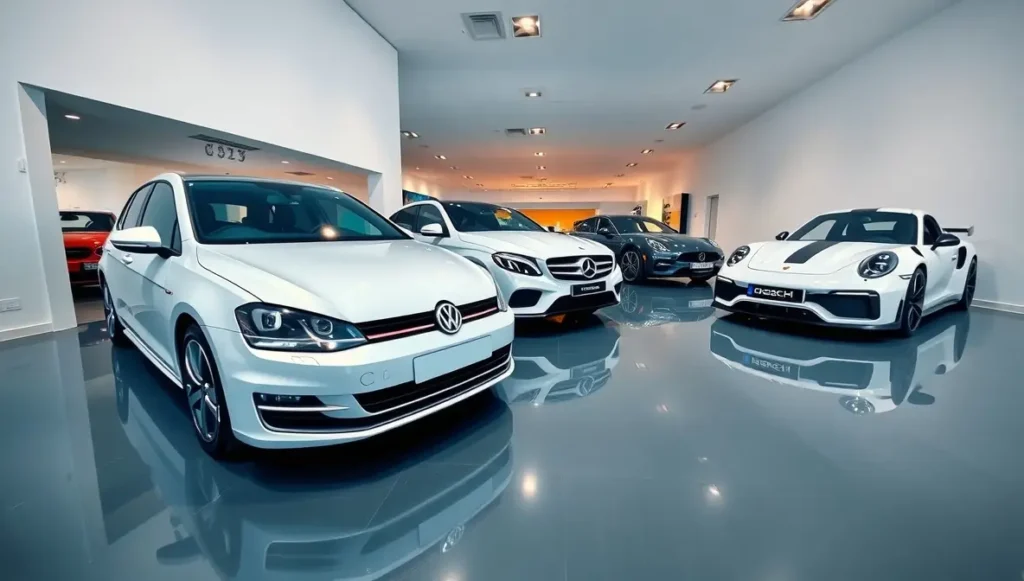
You see all these “best car brands in Germany” lists online, right?
Well, after 17 years as an electromechanic, I’ve fixed them all — the good, the bad, and the ones that should never have left the factory. So here’s the real answer from the workshop floor: for most people, the best car brands in Germany for reliability are Volkswagen, Mercedes, and Porsche.
I’ve watched these engines hit 300,000 km and keep going, as long as the owner shows them a bit of love.
But I know you came here for more than just three names.
Stick with me. I’ll give you the full story, from luxury marques to old-timers, and the models worth chasing today. And I promise something else: every burning question you have about German car brands, I’ll answer it.
Let’s find you a German car that won’t let you down.
Table of Contents
The 10 Most Reliable German Car Brands: A Mechanic’s Trusted List
Reliability isn’t a badge. It’s something I witness every single day — in the engines I rebuild, the parts that fail, and the cars that keep showing up without major complaints.
Here are the ten German brands that repeatedly earn my respect.
1. Porsche — The Over-Engineered Masterpiece

My Take:
Working on a Porsche is… different. Every bolt feels like it was machined by someone who actually cared. While most people dream of driving one, I get to see why they’re so dependable. Parts are premium, the assembly is tight, and failures are surprisingly rare. Sure, when something does break, your wallet will scream. But the truth is, they break far less often than most expect.
Under the Hood:
- Engine: That iconic flat-six — smooth, high-revving, and built to outlive the body.
- Chassis: Rigid, precise, engineered for decades of spirited driving.
- Cost:
- 911 → from €115,000+
- Macan → from €70,000+
Porsche is unbeatable… but not everyone needs a supercar for school runs.
Let’s talk about the brand that brings sporty reliability to everyday life.
2. BMW — The Confident All-Rounder

My Take:
If you want sporty German engineering with daily usability, BMW nails that sweet spot. Their inline-six engines are some of the best pieces of engineering Germany has ever produced. They reward owners who follow maintenance properly — skip services and they’ll bite back, but treat them well and they’ll run beautifully for years.
Under the Hood:
- Engine: Smooth, torquey, bulletproof inline-six.
- Drive: Classic RWD feel (or xDrive AWD).
- Cost:
- 3 Series → from €45,000
My advice: Avoid early BMW timing chain issues on the N47 engine — I’ve replaced too many.
BMW is the sporty choice.
But if comfort, prestige, and long-distance luxury are your priority, you’re about to meet the king.
3. Mercedes-Benz — The Pillar of Prestige

My Take:
A well-built Mercedes feels like a rolling fortress. Their sedans and SUVs are engineered for long-distance comfort — the kind that makes 500 km drives feel like nothing. But here’s the catch: air suspensions, advanced electronics, and premium tech mean more complexity, and complexity means higher repair bills down the line.
Under the Hood:
- Build Quality: Solid structure, luxurious and durable cabins.
- Tech: Brilliant but can get expensive when sensors get moody.
- Cost:
- C-Class → from €44,000
My advice: Mercedes Airmatic is beautiful, but expensive when it fails.
Mercedes nails refined luxury.
But maybe you prefer something more modern, digital, and design-focused…
4. Audi — The Tech-Savvy Stylist

My Take:
Audi’s interiors are the reason people fall in love with these cars before they even start the engine. Their Quattro AWD system is legendary. Reliability is good, though their electronics can be… let’s call it “temperamental.” Gorgeous cars, but a bit sensitive.
Under the Hood:
- Star Feature: Quattro = unmatched grip and stability.
- Cabin: Virtual Cockpit feels like driving the future.
- Cost:
- A4 → from €43,000
Luxury is great, but maybe you want something simple, honest, and solid.
Enter the people’s champion.
5. Volkswagen — The People’s Champion
My Take:
When you think “reliable everyday German car,” you think Volkswagen. The Golf is a legend. Affordable parts, widespread service, mature engineering — VWs are built for people who just want a car they can count on.
Under the Hood:
- Engines: 1.5 TSI & TDI — proven, efficient, easy to fix.
- Philosophy: Smart, practical layouts that keep costs down.
- Cost:
- Golf → from €29,000

Volkswagen delivers dependable, humble quality.
But what if your budget is tighter and you want even simpler engineering?
6. Opel — The Understated Workhorse
My Take:
Opel gets unfairly overlooked. They’re simple, tough, and reliable. In my workshop, they’re the definition of “fix and forget.” Fewer electronics = fewer nightmares. Perfect for families who want German build quality without luxury-brand costs.
Under the Hood:
- Simplicity: Fewer systems, fewer headaches.
- Value: Cheap to run, cheap to repair.
- Cost:
- Astra → from ~€24,000
Opel is honest engineering.
But what if you live in the city? Then your needs change completely.
7. Smart — The Urban Wizard
My Take:
For cities, Smart is a genius idea. Now fully electric, they’ve removed the most complex part of a car: the internal combustion engine. With far fewer moving parts, long-term reliability improves. Perfect for tight streets and impossible parking.
Under the Hood:
- Motor: Electric = minimal maintenance.
- Size: Tiny footprint, massive convenience.
- Cost:
- Smart #1 → from €25,000–€28,000
Smart is brilliant for the city.
But what if you want small AND premium?
8. Mini — The Fun-Sized Premium Choice
My Take:
Mini might look British, but their reliability comes straight from BMW engineering. They’re fun, stylish, and surprisingly durable. Great for drivers who want personality without sacrificing quality.
Under the Hood:
- Engines: Small turbo petrol, some hybrids.
- Drive: Mostly FWD.
- Cost:
- Mini Cooper → from €32,000–€36,000
We’ve covered city cars, luxury, and mainstream picks.
Now let’s talk about performance-luxury with a cult following.
9. Alpina — The Gentleman’s Performance Brand
My Take:
Alpina takes BMWs and turns them into refined, elegant performance machines. Think of them as the mature alternative to M cars — fast, luxurious, and deeply engineered.
Under the Hood:
- Engines: Tuned BMW 6-cylinders and V8s.
- Craftsmanship: Limited production = meticulous assembly.
- Cost:
- Alpina B3/B5 → from €90,000+
Alpina is rare, expensive, and exceptionally well built.
Now for a name with history — and a modern revival.
10. Borgward — The Historic Comeback
My Take:
Borgward carries heritage, and its revival brought modern engineering with retro soul. Reliability is still developing, but build quality is respectable, and pricing is competitive.
Under the Hood:
- Engines: Mostly 4-cylinders; some EVs.
- Tech: Modern safety + clean design.
- Cost:
- BX7 → around €40,000+
Where German Engineering Truly Shines
We’ve gone through the list.
Now let’s dig into what people always ask me: luxury… and the old-school legends.
Luxury German Car Brands — The Honest Mechanic’s View
Look, we’ve all dreamed of driving a Porsche, S-Class, or high-end Audi. Luxury German car brands give you a driving experience that borders on emotional:
- Better materials
- Thicker insulation
- Precise engineering
- Beautiful interiors
But here’s the truth I tell customers:
A luxury car is like a Swiss watch — amazing, but it demands attention.
Expect higher maintenance, pricier parts, and specialist labor.
If you accept that, the reward is unforgettable.
Old German Car Brands — The Backbone of the Autobahn
When I say old German car brands, I’m talking about legends:
Mercedes, Opel, Volkswagen.
These guys built Germany’s reputation.
I still see old W124 Mercedes with 400,000+ km running smoother than some modern cars with half the mileage.
Old German engineering values:
- Thicker steel
- Fewer electronics
- Over-built mechanical components
- Designs meant for mechanics, not laptops
But here’s your mechanic’s warning:
- A new VW isn’t a Mk2 Golf.
- A new Mercedes isn’t a W124.
- They’re advanced computers on wheels now.
The heritage still helps us as mechanics — we know which engines last and which years to avoid — but don’t expect modern cars to be as simple or indestructible as the classics.
Quick Car Questions Answered
Which car brand is the best in Germany?
Volkswagen for everyday use, Mercedes or Audi for luxury, and Porsche for pure engineering excellence.
Which German car brand is most reliable?
From my workshop experience: Porsche. For budget-minded reliability: Volkswagen.
What is the most popular car in Germany?
The Volkswagen Golf has dominated the market for decades.
What is Germany’s favorite car?
Most families dream of owning a Mercedes-Benz, even though many drive Volkswagens.
Final Thoughts: Best car brands in germany
We’ve talked about luxury, classics, legends, and workhorses.
In the end, the best German car isn’t just a brand — it’s the one that fits your needs, your budget, and your driving style.
That’s always been my rule:
get the car that makes sense for your life, not the one with the fanciest badge.
👉 If you have questions about any model, maintenance, reliability, or buying advice — drop a comment below.
I’ll answer everyone.
And if you want another article (electric German cars? old-school BMW engines? German vs Japanese reliability?), just tell me — I’d be happy to write it.