
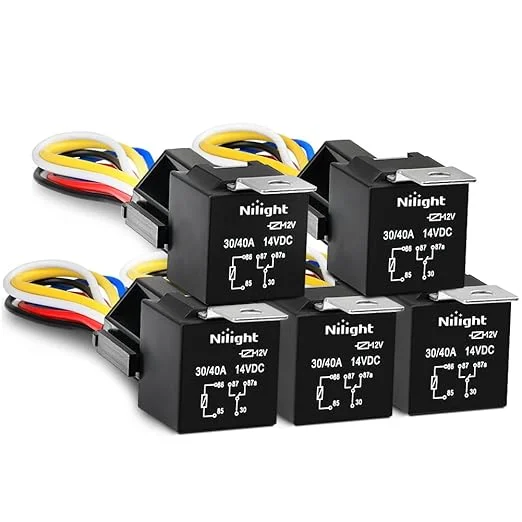
It started with a no-start situation. The ignition clicked, but nothing happened. After ruling out the battery and starter, I pulled the fuel pump relay. Sure enough—it had failed. That tiny black cube, no bigger than a sugar cube, had sidelined a whole vehicle.
Seventeen years under the hood taught me this: that little black box called a relay? It’s the silent troublemaker behind half of the mystery’ electrical gremlins. I’ve watched seasoned mechanics throw parts at a problem for days, only to find a $10 relay was the culprit all along. Here’s the no-BS guide I wish I had when I started – the same tricks I use today to test a car relay from 2-pin to 6-pin with nothing fancier than a multimeter. No jargon, just what actually works when you’re elbow-deep in a real car, not a textbook example.
Table of Contents
🔌 What Is a Car Relay and Why It Fails
A car relay is essentially an electronically controlled switch. It lets a low-current circuit (like your ignition switch) control a high-current circuit (like the fuel pump or headlights). Most relays operate off a 12V coil, drawing a small current—typically between 100 to 200 milliamps.
Why relays fail:
- Carbon buildup on the contacts
- Overheating
- Vibration fatigue (especially in engine bays)
- Water intrusion or corrosion
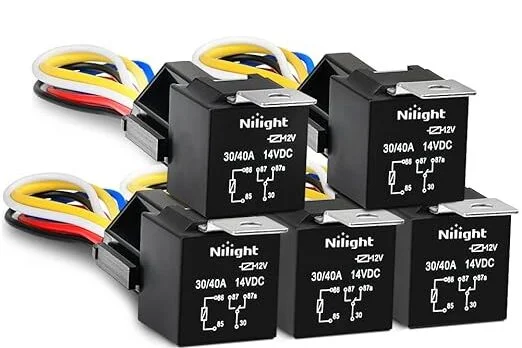
A faulty relay can cause intermittent failures—one of the hardest issues to pin down. That’s why knowing how to test it properly is crucial.
🔧 Tools & Multimeter Settings You’ll Need
Before diving into the step-by-step tests, here’s what you’ll need:
| Tool/Item | Purpose |
|---|---|
| Digital Multimeter | For resistance and continuity testing |
| 9V Battery (for 4-pin test) | To manually energize the relay coil |
| Jumper wires (optional) | For off-car testing |
| Relay diagram (on casing) | Pin layout and function |

What settings on a multimeter to test ohms?
Set your multimeter to Ω (Ohms) for resistance checks. For continuity, look for the diode or soundwave icon (⏶ or 📢)—that’s the symbol for continuity.
🔍 What Is the Primary Method to Test a Car Relay Using a Multimeter?
The primary method to test a relay involves checking both:
- The coil resistance (between the relay’s control pins)
- The contact continuity (when the relay is activated)
Steps:
- Locate the coil terminals. Usually marked 85 and 86.
- Set multimeter to Ω mode.
- Place probes on terminals 85 and 86.
- You should read between 50 and 200 ohms.
- 🔎 How many ohms is a bad relay? If it reads OL (infinite) or 0 ohms, it’s bad.
- Now check the load terminals (usually 30 and 87).
- With the relay de-energized, there should be no continuity between 30 and 87.
- Apply 12V across 85 and 86 (using a battery or test bench).
- While energized, you should hear a “click.”
- Test continuity between 30 and 87—this should now be closed (low resistance).
Pro Tip: Always test resistance first, continuity second. Don’t guess—test.
🧩 Testing Different Relay Types – A Mechanic’s Field Guide
Let me walk you through testing various relays like I would with a new apprentice in my shop. These aren’t textbook procedures – they’re the real-world methods I’ve used for nearly two decades.
🔧 2-Pin Relay (The Simple One)
These are rare in cars but common in older bikes. Just measure resistance across both pins. No resistance? The coil’s toast. Simple as that.

🏍️ 3-Pin Relay (Motorcycle Special)
Common in bikes and aftermarket accessories. Here’s my quick test:
- Check coil resistance between two pins (should be 50-120Ω)
- Apply power – you should hear a solid click
- Verify continuity between common and output pins when powered

🚗 4-Pin Relay (Your Car’s Workhorse)
This is the standard relay you’ll find everywhere. Pins are:
- 85 & 86: Coil (-/+)
- 30: Common
- 87: Normally open
My go-to test method:
- Check coil resistance (85-86) – should be 60-150Ω
- Hook a 9V battery to the coil (polarity doesn’t matter)
- Listen for that satisfying click
- Verify continuity between 30 and 87 (should show 0Ω when powered)
Pro Tip: No 9V battery? Use your car battery – just don’t hold the wires too long or you’ll fry the coil.
🔄 5-Pin Relay (The Switch Hitter)
Adds a 87a pin (normally closed). Here’s the deal:
- Unpowered: 30 connects to 87a
- Powered: 30 switches to 87
Test both states. If it doesn’t switch cleanly, toss it.
🤯 6-Pin Relay (The Overachiever)

These usually have dual coils or extra controls. My approach:
- Find and test each coil pair (might be 85-86 and 88-89)
- Follow the internal diagram (if you can find one)
- When in doubt, Google the part number – most manufacturers provide pinouts
Shop Wisdom: I keep a known-good relay of each type in my toolbox for quick comparison testing. Saves hours of headache.
Remember: If a relay feels hot to the touch or smells burnt, it’s done – no testing needed. Trust me, I’ve learned this the hard way after one too many melted fuse boxes.
🧪 Test a Relay Without a Multimeter (On and Off the Car)
🔧 On the Car:
- Swap it with a known-good identical relay from another system (like horn).
- If the system works, the relay was bad.
- Caution: Don’t swap a critical relay (like ECU or ignition) with one that could damage components.
🔌 Off the Car:
- Use a 9V battery and two wires.
- Power the coil and listen for a click.
- Use a test light or continuity probe on the switching pins.
Tip from experience: Feel the relay click with your fingers—no click = no action.
⚡ Hard-Won Relay Wisdom From the Trenches
After burning my fingers on more bad relays than I can count, here are the golden rules I live by in the shop:
🖊️ Mark Your Territory
That relay you just tested? Mark it with the date and “OK” using a paint marker. Next time it acts up, you’ll know exactly when it was last checked. (This trick saved me from chasing ghosts on a ’08 Silverado last winter.)
🧴 Grease is Your Friend
A dab of dielectric grease on the terminals isn’t just busy work – it’s the difference between a reliable connection and a corroded mess six months down the road. I’ve seen more relay failures from green, crusty terminals than actual bad relays.
📟 Don’t Cheap Out on Tools
That $5 multimeter from the discount bin? It’ll lie to you when you need it most. Spend on one with auto-ranging and a loud continuity beep – when you’re under a dashboard, you need to hear that connection, not squint at a display.
📖 Know Your Enemy
Here’s the cold truth: not all 30-87-85-86 pinouts are created equal. I wasted three hours once because a Ford’s relay logic was backwards from what I expected. Now I always check the wiring diagram first.
🔥 The Phantom Menace
The most evil relays test fine cold but fail when hot. If you’re dealing with an intermittent issue, hit the suspect relay with a heat gun (carefully!) while testing. You’d be surprised how many “good” relays fail this test.
👨🔧 Pro Tip Straight From the Bench
A healthy 4-pin relay should read between 30-300 ohms. Outside that range?
- Below 30Ω: Coil’s probably shorted
- Above 300Ω: It’s on its last legs
- Infinite? Toast.
*(Fun fact: I keep a “hall of shame” box of failed relays in my shop. The ones that read 500Ω+ but still “worked” intermittently? They’re the sneakiest.)*
Remember: In the relay game, it’s not about just finding the bad ones – it’s about making sure the good ones stay that way. Now go forth and conquer those electrical gremlins!
🧠 Real-World Relay Q&A
Let me break down these relay questions like I’m explaining them to an apprentice over a cup of coffee. No textbook jargon – just straight talk from years of hands-on work.
“How do I actually test a car relay?”
Grab your multimeter. First check resistance across the coil pins (should be 50-120Ω for most). Then power it up – you should hear a solid click. No click or weird resistance? Toss it. I’ve thrown out more relays than I can count this way.
“What’s the real way to test with a multimeter?”
Here’s how I do it every day:
- Ohm test the coil (look for 50-150Ω)
- Power the coil and check if it actually switches
Pro tip: If the numbers look good but it’s acting flaky, heat it up with a heat gun – many fail when hot.
“When is a relay definitely bad?”
If you see:
- Less than 30Ω (coil’s shorted)
- Over 300Ω (dying)
- “OL” (already dead)
Fun fact: I keep a “graveyard” of relays that tested “almost good” but failed under load.
“How much juice does a 12V relay really use?”
Most pull 100-200mA – about like a small bulb. Enough that if you’re bench testing, don’t hold the wires too long or you’ll fry it (learned that the hard way).
“Multimeter settings confuse me – help!”
For resistance: Ω symbol (start at 200Ω range)
For continuity: Look for the 🔊 or ⏶ symbol – it should beep when things are connected
“How to test with just a 9V battery?”
Hook it to pins 85 & 86:
- Click? Good start
- Now check if 30 & 87 connect (should be 0Ω)
No multimeter? Use a test light between 30 & 87 – should light when powered.
“No tools at all? Now what?”
Try this shop trick:
- Find the same relay elsewhere in the car (like the horn)
- Swap them
If the problem moves, you’ve found your culprit. Just did this yesterday on a stubborn Ford!
🔥 Final Thoughts: Your Turn Under the Hood
Let’s be real – relays are the ninjas of your car’s electrical system. Silent. Deadly when they fail. But now? You’re armed with the same testing tricks I use daily in my shop. No more throwing parts at problems blindly.
That 9V battery test? It’s saved more weekend mechanics than I can count. The multimeter method? That’s your golden ticket to electrical confidence. But here’s the truth – every car has its quirks.
Got a relay mystery that’s got you stumped? Drop your question below – I read every comment and love solving real-world electrical puzzles. While you’re here, check out these two deep dives next:
- Car Horn Not Working? Here’s What to Do Before Panicking
- How to Flush a Car Radiator (and Why It Matters More Than You Think)
Remember: In the relay game, knowledge is voltage – and you’re now fully charged. Let’s hear those troubleshooting stories!.
Pingback: Master Fog Lights: Expert Mechanic Tips for Safe Driving
Pingback: Electric Fuel Pump for a Carburetor: Signs & Best Picks
Pingback: OBD2 Scanner Is Not Connecting? Fix It Fast with These Tips
Pingback: 4 Critical Reasons Your Radiator Fan Is Not Working