
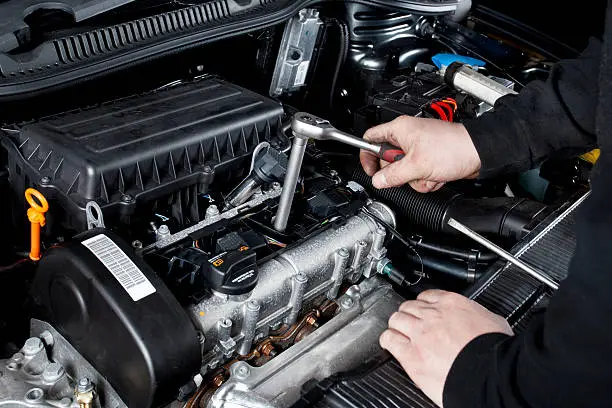
Replacing spark plugs can cost anywhere from $100 to $400 or more for parts and labor.
And if you’ve just been quoted $300, you might be thinking:
“For a few little spark plugs?”
Fair question.
The price can change dramatically depending on your engine. A simple 4-cylinder may be quick and easy. A V6 or V8 can take much longer, especially when some of the plugs are buried behind other components.
And here’s the part many people don’t realize:
The spark plugs may not be the expensive part. The labor can be.
In this guide, I’ll show you what affects the price, how to recognize worn plugs, what you need for a DIY replacement, and how to avoid replacing parts you don’t actually need.
Let’s start with the number you’re probably looking for.
Table Of Content
Table of Contents
How Much Does It Cost to Replace Spark Plugs?
For many vehicles, spark plug replacement costs around $100–$400, including parts and labor.
As a general guide:
| Vehicle / Situation | Typical Cost |
|---|---|
| 4-cylinder | $100–$250 |
| V6 | $200–$400+ |
| V8 | $250–$500+ |
| Difficult-access engine | $300–$600+ |
| DIY parts | ~$30–$150+ |
These are estimates. Your actual price depends on the vehicle, local labor rates, spark plug type, and how difficult the plugs are to reach.
Why Can One Car Cost $150 and Another $500?
Four things usually explain the difference:
Number of plugs: A 4-cylinder needs four. A V8 needs eight.
Plug type: Platinum and iridium plugs generally cost more than basic plugs.
Accessibility: This is the big one. Easy-to-reach plugs mean less labor. Buried plugs mean more.
Labor rate: Shop prices vary considerably by location.
So if two shops give you completely different quotes, don’t immediately assume something is wrong.
Ask:
“Can you break down the parts and labor?”
That simple question can tell you a lot.
And once you know what you’re paying for, there’s another question worth answering…
What Does a Spark Plug Even Do?
Think about the clicker that lights a gas grill.
That little spark is essentially what your spark plug produces, but inside your engine, it happens thousands of times during normal driving.
The engine compresses an air-fuel mixture inside the cylinder. At exactly the right moment, the ignition system sends high voltage to the spark plug.
The plug creates a spark.
That spark ignites the mixture, combustion pushes the piston down, and the engine produces power.
Simple, right?
But when that spark becomes weak or inconsistent, your engine can start complaining.
You may notice:
- Misfires
- Rough idle
- Hesitation
- Poor acceleration
- Poor fuel economy
- Hard starting
- Check-engine light
But here’s the catch:
Those symptoms don’t automatically mean the spark plugs are bad.
An ignition coil, wiring problem, fuel injector, vacuum leak, compression problem, or engine-management fault can cause similar symptoms.
That’s why diagnosis comes before parts.
How to Change Spark Plugs: Step-by-Step
Changing spark plugs can be a very manageable DIY job on many vehicles.
But there’s one thing you don’t want to rush:
The threads.
A damaged spark-plug thread in an aluminum cylinder head can turn a simple maintenance job into an expensive repair.
What You’ll Need

- Spark plug socket
- Ratchet and extensions
- Torque wrench
- Gap tool, if adjustment is permitted
- Compressed air or soft brush
- Dielectric grease
- Correct replacement plugs
A proper spark-plug socket helps hold the plug securely while you work.
And don’t skip the torque wrench.
“Nice and tight” isn’t a specification.
1. Let the Engine Cool
Let the engine cool completely before starting.
Make sure the ignition is switched off and the vehicle is secure. If your manufacturer recommends disconnecting the negative battery cable for the procedure, follow that instruction.
Then clean around the spark plugs with compressed air or a soft brush.
You don’t want dirt falling into the plug hole when you remove the old plug.
It takes seconds.
But those seconds matter.
2. Remove the Coil or Plug Wire
Depending on your engine, you’ll have ignition coils or spark-plug wires.
Disconnect the connector carefully and remove the retaining bolt if necessary.
Then gently twist the rubber boot before pulling it upward.
Don’t yank on the wire.
A damaged ignition wire can create another problem before you’ve even finished the first one.
3. Remove the Old Plug
Use the correct spark-plug socket and carefully loosen the plug.
Once it’s loose, finish removing it by hand.
If you feel unusual resistance, stop.
Don’t force it.
Once the plug is out, look at it before throwing it away.
Sometimes the old plug gives you a clue about what’s happening inside that cylinder.
And now comes a small detail that can save you from damaging a brand-new plug.
4. Check the New Plug

Verify that the replacement plug matches your vehicle’s specifications.
Check the recommended gap, too.
But don’t automatically adjust every new plug.
Some modern iridium and platinum plugs are designed to be installed as supplied, and forcing the electrode can damage them.
If adjustment is permitted, use the correct tool and follow the manufacturer’s specification.
And now it’s time for the part where patience matters most.
5. Install the New Plug
Start the plug by hand.
Don’t immediately grab the ratchet.
I like to turn the plug gently backward until the threads settle, then turn it forward.
It should thread smoothly.
If it doesn’t, stop.
Never force a spark plug into the cylinder head.
Once seated, tighten it to the manufacturer’s specified torque.
And don’t automatically apply anti-seize. Many modern plugs are designed to be installed dry, and some manufacturers specifically advise against anti-seize.
For the coil boot, a small amount of dielectric grease can help protect against moisture.
Then reconnect everything and double-check your work.
One last inspection now can save you a frustrating restart later.
Signs Your Spark Plugs Are Worn Out
Your engine usually gives you clues before the plugs completely fail.
Misfire
The engine may stumble, jerk, or hesitate when accelerating.
Rough Idle
You may feel unusual shaking or vibration while stopped.
Poor Fuel Economy
A combustion problem can contribute to increased fuel consumption.
Loss of Power
The engine may feel sluggish when you accelerate.

Hard Starting
The engine may crank longer than usual before starting.
But remember:
These symptoms don’t prove the spark plugs are bad.
If the check-engine light is on, an OBD2 scanner can help identify misfire codes and, on many vehicles, the affected cylinder.
That gives you information instead of guesswork.
And sometimes that’s all you need to avoid buying parts you don’t need.
How Long Do Spark Plugs Last?
The best answer is:
Follow your vehicle manufacturer’s maintenance schedule.
As a general guide:
- Copper/nickel: around 20,000–30,000 miles
- Platinum: around 60,000–80,000 miles
- Iridium: around 80,000–120,000+ miles
These are only general ranges. The actual interval depends on the vehicle and spark-plug design.
Don’t replace plugs based only on a generic internet number.
Your owner’s manual wins.
Do You Need a Spark Plug Tester?

A spark tester can help determine whether an ignition system is producing spark.
It’s useful, but don’t treat it as a complete diagnosis.
No spark could mean a bad coil, wiring problem, power supply issue, sensor problem, or ignition-control problem.
A visible spark also doesn’t prove that the entire ignition system is healthy under every operating condition.
That’s why a spark tester and an OBD2 scanner can work well together.
One checks ignition output.
The other can give you information about engine faults.
Can You Change Spark Plugs Yourself?
Yes, on many vehicles.
Spark plug replacement is a reasonable DIY job when the plugs are easy to access and you have the correct tools.
I’d consider it a moderate-difficulty repair.
DIY makes sense if you’re comfortable with:
- Removing coils or plug wires
- Using a torque wrench
- Working carefully around aluminum threads
- Following the correct plug specifications
I’d call a professional if the plugs are difficult to access, seized, or if you’re already dealing with a serious engine problem.
Because saving $100 in labor isn’t much of a victory if a simple job becomes a major repair.
How Much Should a Mechanic Charge?
For an easy 4-cylinder, a quote around $100–$250 isn’t unusual.
For a V6, V8, luxury vehicle, or difficult-access engine, the price can be considerably higher.
Before accepting a quote, ask:
- Which spark plugs are being installed?
- How much are the parts?
- How much is labor?
- Why does my vehicle require that much labor?
- Are any additional parts or services included?
A good repair shop should be able to explain the quote clearly.
And once you understand the quote, you can make a much better decision.
Spark Plug Replacement FAQ
How much does it cost to replace spark plugs?
Spark plug replacement typically costs $100–$400, including parts and labor. Some difficult-access engines can cost more.
How much does it cost to replace spark plugs on a 4-cylinder?
A 4-cylinder spark plug replacement commonly costs around $100–$250, depending on the vehicle and labor rate.
How much does it cost to replace spark plugs on a V6?
A V6 replacement commonly costs around $200–$400 or more, depending on accessibility and labor.
How much does it cost to replace spark plugs on a V8?
A V8 typically costs around $250–$500+ because it requires more plugs and may require more labor.
How often should spark plugs be replaced?
Follow your vehicle manufacturer’s maintenance schedule. Depending on the plug and vehicle, intervals can range from roughly 20,000 to 120,000+ miles.
What are the symptoms of bad spark plugs?
Common symptoms include misfires, rough idle, hesitation, poor acceleration, reduced fuel economy, and hard starting.
Can bad spark plugs cause a check-engine light?
Yes. Worn or damaged spark plugs can cause engine misfires that trigger the check-engine light.
Can I replace spark plugs myself?
Yes. Many spark plug jobs are suitable for DIYers if the plugs are accessible and you have the correct tools and torque specifications.
Should I replace ignition coils with spark plugs?
Not necessarily. Replace an ignition coil only if testing or symptoms indicate that the coil is faulty.
How long does spark plug replacement take?
An easy 4-cylinder job can be relatively quick. Difficult-access engines can take significantly longer.
Is it cheaper to replace spark plugs yourself?
Usually, yes. DIY eliminates labor costs, but incorrect installation can cause expensive damage.
Final Thoughts
Spark plugs are small, but they have a huge job.
And here’s the biggest thing I want you to remember:
Don’t replace parts just because they might be bad. Diagnose first.
After 17 years around vehicles, I’ve learned that replacing parts without finding the real problem is one of the fastest ways to waste money.
Sometimes it’s the spark plugs.
Sometimes it’s the ignition coil.
Sometimes it’s wiring, fuel delivery, compression, or something completely different.
That’s why I believe understanding how to diagnose your car is just as important as knowing how to repair it.
If your plugs are due for replacement and they’re easy to reach, this can be a great DIY project.
If they’re buried inside the engine or your car has a serious misfire, know when to stop and get professional help.
Because most car problems start small.
Catch them early, diagnose them correctly, and you can save yourself a lot of money and a lot of frustration.
And that’s exactly what I’m trying to help you do here at HelpyMechanic:
Don’t just replace parts. Learn how to diagnose the problem.
Pingback: Car Shakes While Parked or Idling? 6 Causes You Should Know