
You turn the key. Nothing. Or worse: that single loud click that sounds like your car just gave up on life.
I’ve been there. More times than I can count, actually. Twenty years turning wrenches will do that to you.
Here’s the thing most people don’t realize: a starter that’s starting to fail usually gives you warnings. It’s not like a light bulb that works perfectly one second and dies the next. Starters wear out slowly. They get lazy. They hesitate. And if you know what to listen for, you can catch it before you’re stranded in a parking lot at midnight.
This guide is going to walk you through the emergency tricks that might get you home, the warning signs you should never ignore, and how to figure out if it’s actually your starter or something else pretending to be.
Let’s get into it.
Table Of Contents
Table of Contents
Emergency Starter Fixes: How to Get Moving When Your Starter Dies (Mechanic-Approved Tricks)
Your starter just gave out in a parking lot, and you need to get home? Before you call a tow truck, try these proven mechanic’s tricks to revive a failing starter just long enough to reach a repair shop.
(⚠️ Warning: These are LAST-RESORT fixes. Permanent damage can occur if abused!)
The Hammer Tap Method (For Stuck Brushes)
The Hammer Tap Method
This one’s been around forever because it actually works sometimes.
Here’s why: older starters use carbon brushes that press against a spinning copper commutator. Over time, those brushes wear down and can get stuck in their holders. When that happens, the starter gets power but can’t spin. A sharp tap can shake the brushes loose and give you one more crank.
How to do it:
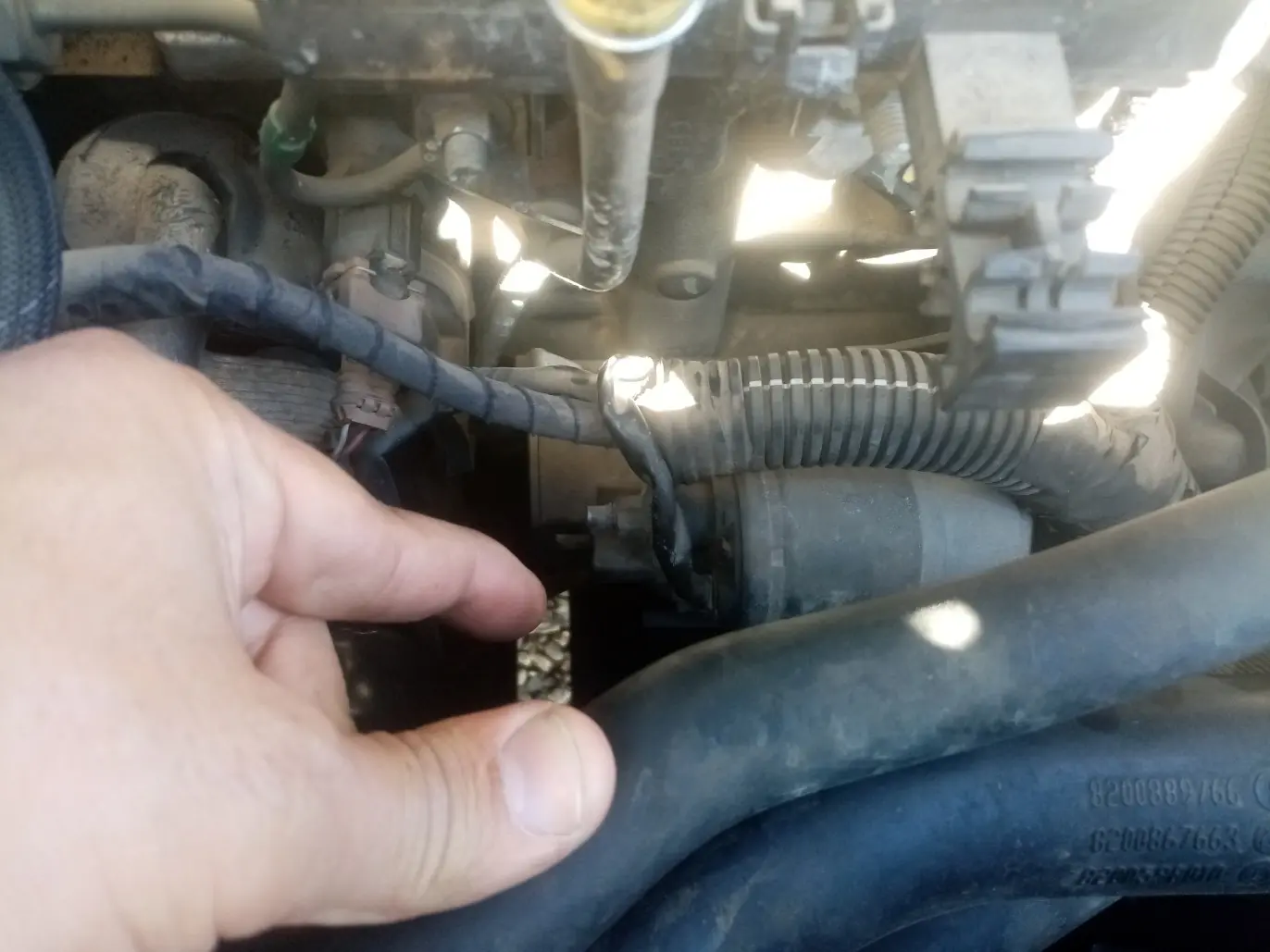
Find your starter. It’s usually bolted to the engine block near where the transmission meets the engine. Follow the thick positive cable from your battery; it’ll lead you right to it.
Have someone sit in the driver’s seat with the key ready.
Tap the cylindrical body of the starter, not the smaller attached cylinder (that’s the solenoid), with a hammer or the handle of a wrench. You’re not trying to smash it. Think “firm knock on a door,” not “Thor’s hammer.”
Have your helper turn the key while you’re tapping.
Important caveat: This trick works best on older cars with traditional brushed starters. On modern starters with permanent magnets, tapping can crack the magnets or damage the casing. And even on older cars, if you have to do this more than once, your starter is on borrowed time. Replace it. Soon.

Push-Start (Manual Transmission Only)
If you drive a manual, this is your best emergency option. It uses the car’s momentum to turn the engine instead of the starter.
Here’s how:
Turn the ignition to ON, but don’t crank it.
Press the clutch and shift into second gear. Not first. First is too jerky and can damage your transmission.
Get someone to push, or roll down a slight hill.
Once you’re moving at about 5–10 mph, release the clutch.
The engine should catch and start running. Keep your RPMs up for a bit; it might stall if you let it idle too low right away.
When this won’t work: If your battery is truly dead (below 10 volts), the fuel pump and computer won’t have enough power to run the engine. Flooded engines won’t start this way either. And if your security system is locked out, forget it; the car won’t run no matter how fast you push it.
A Quick Word About Solenoid Bypass
You might see this mentioned in forums. Someone will tell you to use a screwdriver to jump the starter solenoid terminals.
I’m not going to give you step-by-step instructions for that. Here’s why: you’re essentially creating a direct short between two high-current terminals. If you touch the wrong thing, you can weld your screwdriver to the engine, start a fire, or get a nasty burn. It’s a trick for experienced mechanics who know exactly what they’re doing and have the right tools.
If you’re reading this article because your car won’t start, you’re probably not in that category. Skip it. Call a tow.
My Honest Take on Emergency Fixes
| Method | When It Works | Risk Level | Reality Check |
|---|---|---|---|
| Hammer Tap | Older brushed starters with stuck brushes | Low if done carefully | Temporary. Replace the starter within days. |
| Push-Start | Manual transmission, battery has some charge | Medium | Works great, but only if you have a manual and a slope or a friend. |
| Solenoid Bypass | Almost never worth the risk for a DIYer | High | Don’t do this unless you really know what you’re doing. |
One more thing: Carry a portable jump starter, not for the starter itself, but for your battery. Modern jump packs often have built-in voltage testers, which can tell you whether you’re dealing with a dead battery or a dead starter. That one tool can save you a lot of guessing.
5 Warning Signs Your Starter Is Nearing Retirement
Pay attention to these. They’re your early warning system.
1. The “Second Try” Syndrome
Your car starts fine on the first try in the morning, but later in the day it needs two or three attempts. That’s usually worn brushes. They’re making contact, but barely. You’ve got maybe 30% of their life left.
2. Temperature Sensitivity
Works perfectly at 70°F. Fails at 10°F or 100°F. That’s usually the solenoid (the smaller cylinder attached to the starter that engages the drive gear). Temperature-sensitive solenoid contacts are a classic sign of a starter on its way out.
3. Intermittent No-Crank
Sometimes it starts. Sometimes it doesn’t. No pattern. This one’s frustrating because it’s unpredictable. It often means loose internal connections or a failing solenoid. Sometimes it’s repairable. Sometimes it’s not.
4. Growling During Engagement
If you hear a grinding or growling sound for a second or two when you turn the key, your starter drive gear is worn. It’s not meshing properly with the flywheel. If you ignore this, you’ll eventually damage the flywheel teeth, and that’s a transmission-out repair.
5. Visible Corrosion
White or green crust on the starter body or terminals. That’s salt damage. If you live near the coast, this is your reminder to spray your starter and connections with anti-corrosion spray once a year.
Replace vs. Repair: What Makes Sense?
| Symptom | Likely Fix | Cost Estimate |
|---|---|---|
| Worn brushes | Brush kit replacement | $40–$80 DIY |
| Bad solenoid | Solenoid rebuild | $60–$120 at a shop |
| Seized motor | Full replacement | $200–$600 depending on the car |

Here’s my honest take: rebuilding starters is a dying art. On a classic car, it’s worth finding an old-school auto electrician who can do it properly. On a modern daily driver? Just replace it. The labor to rebuild usually isn’t worth it, and you’ll get a warranty with a new or remanufactured unit.
Car Won’t Start Even with a Jump? Here’s How to Diagnose It
This is where things get interesting. If your car won’t start even with jumper cables connected, you’ve narrowed it down. The battery might be fine. The problem is somewhere else.
Let’s walk through this step by step.
Step 1: Make Sure the Jump Was Done Right
You’d be surprised how often this is the issue.
Cables connected in the wrong order? It happens. The correct order is: dead battery positive, donor battery positive, donor battery negative, then engine ground on the dead car. Not the dead battery negative to the engine ground. That last connection should be to bare metal on the engine, away from the battery.
Donor car not running? The donor vehicle needs to be running at about 2,000 RPM for at least five minutes. Otherwise, you’re just connecting two weak batteries together and hoping for the best.
Corroded terminals? If your battery terminals are covered in a white or green crust, the jumper cables aren’t making good contact. Clean them with a wire brush (not a key) until you see bare metal.
Quick check: If your lights and radio work but the engine won’t crank, skip ahead to Step 3. That tells you the battery has some charge, and the problem is downstream.
Step 2: Test the Battery Under Load
A resting voltage test tells you part of the story. A load test tells you the rest.
Resting voltage:
Set your multimeter to 20V DC. Touch the probes to the battery posts (not the terminals), the posts themselves.
- 12.6V or higher: Good charge.
- 12.0V to 12.5V: Weak but might still work.
- Below 12.0V: Dead cell. Replace the battery.
Load test:
This is the important one. Have a helper crank the engine while you watch the multimeter.
- Stays above 9.6V while cranking: Battery is healthy.
- Drops below 9.6V: Bad battery, even if it read 12.6V at rest.
That last point trips up a lot of people. A battery can show full voltage at rest and still fail under load. The load test is what separates a good battery from a dying one.
Step 3: Listen to What the Starter Is Telling You
Turn the key and listen carefully.
Single loud CLICK: The solenoid is getting power, but the starter motor isn’t engaging. That’s usually a bad starter. The hammer tap might get you one more start, but you need a replacement.
Rapid clicking: That’s low voltage reaching the starter. The battery might be weak, or you’ve got a bad connection. Clean your battery cables and grounds. If that doesn’t fix it, test the battery again.
Silence (no click at all): No power is reaching the starter. Check the ignition fuse first. It’s usually a 20-amp fuse in the under-hood fuse box. If the fuse is good, test for 12V at the starter signal wire with a test light. If there’s no power there, you’ve got a wiring issue, a bad ignition switch, or a neutral safety switch problem.
Step 4: The Starter Tap Test (If You’re Really Stuck)
If you’ve got an intermittent starter failure and you need to get home, the tap test might work.
Locate the starter. Tap the side of the motor body (not the solenoid) with a wrench or hammer. Have a helper turn the key while you’re tapping.
If it starts, you’ve confirmed the starter is the problem. Worn brushes or a sticking solenoid. Replace it as soon as you can.
Step 5: Check for Security System Lockout
This one catches people off guard.
Symptoms: No crank, security light flashing on the dash, or the car starts with a jump but dies immediately.
What to try:
Try your spare key. The chip in your main key might be damaged.
Disconnect the battery for 15 minutes. That can reset the computer and clear a false lockout.
Look under the dash for an aftermarket alarm system. If you find one, unplug it. They’re notorious for causing no-start issues as they age.
FAQs
Why do BMW starters seem to fail early?
Location. Many BMW starters are mounted under the intake manifold, where they get heat-soaked every time you drive. Heat kills them faster. Some models see failures around 80,000 miles, but it varies.
Do short trips kill starters faster?
More starts mean more wear on the brushes and solenoid. So yes, lots of short trips will wear out a starter faster than long highway drives. But the bigger issue with short trips is what they do to your oil and battery, not the starter itself.
What’s the longest-lasting starter brand?
Denso and Bosch have good reputations. Denso is an OEM for many Toyota and Honda models. Bosch is common in European cars. Cheap aftermarket starters are a gamble; you might get a good one, but you might not.
Pro Tips From a Mechanic Who’s Been There
Clean your starter connections once a year. It takes ten minutes and prevents a lot of headaches.
If you live in a cold climate, park in a garage if you can. It reduces the strain on your starter and your battery.
The next time your car won’t start, have someone turn the key while you listen at the starter. You’ll hear whether it’s clicking, grinding, or completely silent. That tells you more than any dashboard light ever will.
And here’s the big one: a failing starter gives you warnings. Don’t ignore them. That occasional second try, that weird noise on cold mornings those aren’t quirks. They’re your car telling you something’s about to break. Listen to it.
Got a starter story or a question about your specific car? Drop a comment below. I read them all, and I’m happy to help you figure out what’s going on.