
Your car usually doesn’t wake up one morning and decide, “Today, I’m going to ruin your budget.”
Most of the time, it gives you clues first.
A slower-than-usual engine crank. A strange vibration at a stoplight. A warning light that wasn’t there yesterday. A squeak when you brake. A temperature gauge that suddenly looks a little too interested in the red zone.
The problem is that most drivers don’t speak fluent “car.”
And that’s exactly where things get expensive.
So, what are the most common car problems?
The most common problems drivers encounter include battery and starting problems, tire wear, brake issues, overheating, check-engine-light problems, charging-system failures, starter problems, transmission trouble, oil leaks, and worn suspension components.
The good news?
You don’t need to be a master technician to recognize many of the early warning signs.
After 18 years working around automotive electrical and mechanical problems, I’ve learned one thing that saves drivers a surprising amount of money:
The earlier you recognize what your car is trying to tell you, the more choices you usually have.
And some warnings are easy to deal with.
Others?
You really don’t want to ignore them.
Before we get into the ten most common problems, let’s deal with the one question that matters more than everything else.
ADVERTISEMENT-CONTINUE READING BELOW
Table Of Content
Table of Contents
🚨 First: When Should You Stop Driving Immediately?
Not every strange noise means your car is about to explode.
But some symptoms deserve zero experimentation.
If you notice smoke or steam, a strong burning smell, a temperature gauge entering the red zone, a sudden loss of braking ability, a serious oil-pressure warning, or another severe warning accompanied by abnormal vehicle behavior, get somewhere safe and stop driving.
AAA similarly recommends stopping when serious warning signs such as overheating, oil-pressure warnings, flashing engine lights, or major brake problems occur.
And please don’t turn a hot radiator cap into your afternoon science experiment.
Never remove a radiator cap while the cooling system is hot. Pressurized coolant can cause severe burns.
For everything else, let’s slow down.
Because your car may already be giving you the answer.
You just have to know what to listen for.
Your Car’s Cry for Help: 10 Common Problems Decoded
1. Dead or Weak Battery: When Your Car Suddenly Says “Nope”
You turn the key.
Click.
Again.
Click.
And your car responds with the mechanical equivalent of leaving you on read.
A dead battery is one of the most common reasons a car refuses to start.
But here’s something many drivers miss:
A battery often warns you before it dies.
Watch for:
- Slow engine cranking
- Headlights that seem weaker than usual
- Interior lights that dim
- Electronics or clock settings resetting
- Repeated difficulty starting the vehicle
- Needing frequent jump-starts
If the battery is healthy but the charging system isn’t working correctly, you may see similar symptoms.
That’s why replacing the battery immediately isn’t always the smartest first move.

Here’s the quick test I use
With the engine off, measure battery voltage with a multimeter.
A fully charged conventional 12-volt battery will typically be around 12.6 volts, although voltage varies with battery state and temperature.
With the engine running, charging voltage is commonly higher than resting battery voltage, but exact readings vary by vehicle and charging strategy.
So don’t diagnose an alternator from one number alone.
Look at the whole picture.
And before buying a battery?
Corrosion or a loose connection can create enough resistance to cause starting and charging problems.
That five-minute inspection could save you from buying a perfectly good battery you never needed.
Want to diagnose the electrical side yourself?
A basic digital multimeter is one of the most useful tools a DIY car owner can keep around.
And once the engine starts, there’s another part of the car touching the road that deserves your attention.
Which brings us to the four things separating your car from the asphalt.
2. Tires: Four Small Contact Patches Doing a Huge Job
Think about it.
Your entire vehicle is riding on four relatively small areas of rubber.
That’s it.
So when someone tells me they “haven’t checked the tires in a while,” I immediately want to know:
How long is “a while”?
Look for:
- Uneven tread wear
- Cracks or visible damage
- Bulges
- Excessive tread wear
- Persistent pressure loss
- Steering vibration
NHTSA recommends maintaining at least 2/32 inch of tread, and it confirms the traditional penny test: place a penny into the tread with Lincoln’s head facing down; if you can see the top of Lincoln’s head, the tire needs replacement.
But tread depth isn’t the whole story.
What if the tread is wearing unevenly?
That’s where the tire starts telling you a different story.
- Wear mainly in the center can point toward overinflation.
- Wear on both shoulders can be associated with underinflation.
- One-sided wear can point toward alignment or suspension issues.
And here’s the part people sometimes discover too late:
A tire problem may actually be a suspension or alignment problem wearing a tire out for you.
So if one tire keeps wearing strangely, don’t just replace the tire and forget about it.
Find out why.
Because the next problem on our list is something you definitely want working correctly when that worn tire needs to stop.
3. Brake Problems: When Your Car Starts Complaining Every Time You Stop
Your brakes aren’t supposed to be mysterious.
They should simply work.
So when you hear a new squeal, grinding noise, feel vibration, or notice a change in pedal feel, don’t assume your car is being dramatic.
It may actually be asking for help.
Common brake warning signs include:
- High-pitched squealing
- Grinding
- Brake pedal feeling soft or spongy
- Vibration while braking
- Vehicle pulling to one side
- Increased stopping distance
- Brake or ABS warning lights
A squeal can sometimes come from a brake-pad wear indicator, while grinding can indicate that friction material is severely worn and metal contact may be occurring.
A soft or spongy pedal can have several causes, including air or hydraulic problems, and should be properly diagnosed.
And if your vehicle suddenly has significantly reduced braking ability?
Don’t keep driving to see if it gets better.
That’s not troubleshooting.
That’s gambling with something that should never be gambled with.
Now, brakes stop the car.
But what happens when the engine itself starts getting too hot?
That’s where things get much more serious.
4. Engine Overheating: When the Temperature Gauge Starts Moving the Wrong Way
There’s a moment every driver should recognize immediately:
The temperature gauge is climbing toward red.
Don’t wait for it to become a smoke machine.
An overheating engine can be caused by several problems, including:
- Low coolant
- Coolant leaks
- Faulty thermostat
- Water-pump problems
- Radiator problems
- Cooling-fan failure
- Restricted coolant flow
AAA recommends pulling over and shutting the engine off if the temperature gauge reaches the red zone.
If you notice overheating:
- Turn off the A/C.
- Move to a safe location.
- Shut the engine off.
- Allow it to cool.
- Do not remove a hot radiator cap.
You may hear the old trick of turning the heater on full blast to help remove heat from the engine.
It can provide some temporary heat transfer, but it is not a repair.
If the engine is overheating, the goal is to get somewhere safe and diagnose the cooling system, not to see how long it can survive.
And speaking of warning signs…
What about that little yellow engine-shaped light that seems to appear at the worst possible time?
Let’s talk about it.
5. Check Engine Light: Don’t Panic, But Don’t Ignore It
The check engine light has a talent for appearing five minutes after you leave home.
Usually on the day you’re already late.
But here’s the important distinction:
A solid light and a flashing light are not the same thing.
A solid check engine light means the vehicle’s computer detected a fault that needs attention.
The cause could be relatively minor or something more significant.
AAA notes that possibilities range from issues such as a loose fuel cap to engine or emissions-system faults.
A flashing check engine light, however, is much more serious.
It can indicate a severe misfire that may damage the catalytic converter or other components. AAA recommends avoiding continued driving when the light is flashing, particularly if the vehicle is running abnormally.
So what should you do?
If it’s solid and the car feels normal:
- Check for obvious problems.
- Make sure the fuel cap is properly secured.
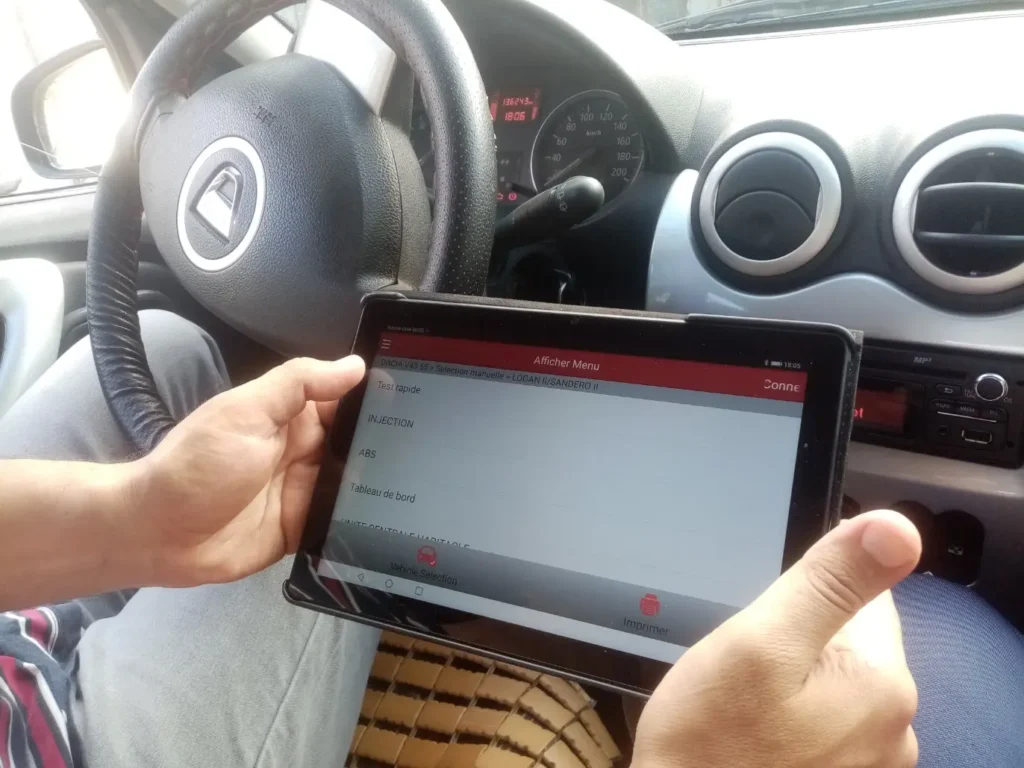
- Scan the vehicle for diagnostic trouble codes.
- Arrange a proper diagnosis.

If it’s flashing:
Don’t treat it like a suggestion.
Safely pull over and get the vehicle checked.
And if you want to understand what the computer is actually seeing, an OBD-II scanner can be extremely useful for basic diagnostics.
But remember:
A trouble code points toward a system or condition. It does not automatically tell you which part to replace.
That’s an expensive lesson many DIYers learn once.
Now, if the battery keeps going flat even after you’ve replaced it…
We may have found the real culprit.
6. Alternator Problems: The Battery May Not Be the Villain
Here’s a classic mistake:
The car won’t start.
You replace the battery.
A few days later…
Dead again.
At this point, don’t blame the new battery.
Ask a better question:
“Who’s supposed to keep the battery charged?”
That’s the alternator’s job while the engine is running.
Possible warning signs include:
- Battery/charging warning light
- Headlights that dim
- Electrical accessories behaving strangely
- Repeated dead batteries
- Whining or unusual noises
- Electrical problems that become worse as the vehicle runs
A charging-system warning light can indicate that the vehicle is no longer receiving adequate charging from the alternator, although the exact fault can vary.
And here’s a useful diagnostic principle:
Battery problem + repeated discharge = check the charging system and parasitic loads before buying another battery.
Because if the alternator isn’t doing its job, your brand-new battery is basically being asked to work a double shift.
It won’t appreciate that.
7. Starter Motor Problems: The Engine Refuses to Turn
Now imagine this:
The headlights are bright.
The radio works.
The dashboard lights up.
But when you turn the key…
Nothing.
Or perhaps one heavy click.
So what’s going on?
If the engine doesn’t crank, possible causes include:
- Weak battery
- Poor battery-terminal connection
- Faulty starter
- Starter relay/control problem
- Ignition-switch problem
- Wiring or ground connection issue
This is where diagnosis matters.
Don’t automatically conclude:
“One click = bad starter.”
It can be the starter, but electrical connections and battery condition should be checked first.
A useful question to ask:
Does the engine crank, or does it simply not start?
Those are two different problems.
If the engine turns over normally but doesn’t run, you’re looking at a different diagnostic path involving fuel, ignition, air, compression, sensors, and engine management.
If it doesn’t crank at all, you’re looking much more closely at the starting circuit.
And if the engine does crank but the car takes its sweet time moving?
Now we’re entering transmission territory.
8. Transmission Problems: The Expensive Conversation Nobody Wants
Transmission problems often start with small complaints.
A hesitation.
A strange shift.
A vibration.
A delay.
Then one day the transmission decides to make the conversation much more serious.
Watch for:
- Delayed engagement
- Harsh shifting
- Slipping
- Unusual noises
- Burning smells
- Fluid leaks
- Unexpected changes in shifting behavior
For example, you shift from Park into Drive and there’s an unusual delay before the vehicle engages.
Or the engine RPM rises but the vehicle doesn’t accelerate as expected.
That deserves attention.
What about transmission fluid?
Follow the manufacturer’s maintenance requirements for your particular vehicle.
Transmission designs vary considerably, and not every vehicle uses a traditional serviceable dipstick system.
So don’t blindly follow a universal “change it every X miles” rule.
Your owner’s manual wins this argument.
And if you see fluid leaking underneath the vehicle?
Don’t wait until the transmission starts shifting like it’s had a very bad day.
Because fluid leaks bring us naturally to another common problem.
9. Oil Leaks: The Little Puddle That Can Become a Big Bill
You park your car.
You walk away.
A few hours later…
There’s a dark spot underneath it.
Your first thought may be:
“It’s probably nothing.”
Maybe.
But oil leaks don’t become less expensive because we ignore them.
Common leak areas include:
- Valve-cover gaskets
- Oil-pan areas
- Filter or drain-plug areas
- Front/rear engine seals
- Other engine sealing surfaces
The tricky part?
Not every dark puddle is engine oil.
It could be another fluid.
And the location on the ground doesn’t always tell you exactly where the leak originates because fluid can travel along components before dripping.
Here’s the smarter approach:
Check the oil level according to the vehicle manufacturer’s procedure.
Look around the engine for fresh oil.
Note the color and consistency of the fluid.
Watch whether the leak gets worse.
And if you’re repeatedly adding oil between service intervals, don’t simply keep topping it off forever.
Find out whether the engine is leaking it, burning it, or both.
Because oil isn’t just another fluid.
It’s part of what keeps expensive engine components alive.
And underneath the engine is another system that can make your car feel like a boat.
10. Worn Suspension: When Your Car Starts Driving Like a Boat
You hit a bump.
The car goes up.
Then down.
Then up again.
And you’re thinking:
“Was that road bump supposed to come with a second bounce?”
A healthy suspension system should control the vehicle’s movement.
Worn shocks or struts can contribute to:
- Excessive bouncing
- Body movement in corners
- Nose-diving during braking
- Clunking noises
- Uneven tire wear
- Reduced ride control
And this isn’t simply about comfort.
Suspension condition can affect tire wear, handling and braking stability.
If your vehicle suddenly feels loose, bouncy or unpredictable, don’t dismiss it as “old car behavior.”
Your car shouldn’t feel like you’re steering a small boat through a parking lot.
🔧 Three Vehicle Problems You Should Watch More Closely
Not every problem affects every vehicle equally.
Some models and powertrains have recurring technical issues that owners should understand.
But here’s the important part:
Don’t assume a model has a problem simply because someone on the internet says every car of that model fails.
Year, engine, transmission, maintenance history and market can change the story dramatically.
For example, certain Ford Focus and Fiesta model years equipped with PowerShift transmissions have been associated with complaints involving shuddering, hesitation and shifting behavior.
Some BMW models from the 2000s and 2010s used cooling-system components that can become brittle with age.
Certain Honda CR-V model years have also been associated with oil-consumption concerns.
The lesson isn’t “these cars are bad.”
The lesson is:
Know the common failure points of the exact vehicle sitting in your driveway.
That knowledge can turn an unexpected repair into planned maintenance.
And now you probably have a few questions.
Let’s answer the ones I hear most often.
Your Burning Questions, Answered
“My lights work, but my car won’t start. What should I check?”
Start with the battery and its connections.
Then determine whether the engine cranks.
If you hear a click but the engine doesn’t crank, the starting circuit, including the starter and its electrical connections, needs investigation.
If the engine cranks normally but doesn’t start, you’re dealing with a different diagnostic path.
“Can I drive with the check engine light on?”
If the light is solid and the vehicle is running normally, a short trip for diagnosis may be possible, but don’t ignore it.
If the light is flashing, especially with shaking, loss of power, strange smells or abnormal engine behavior, safely stop driving and get the problem checked. AAA specifically treats a flashing check-engine light as a serious warning.
“Why does my car shake while driving?”
It depends on when it shakes.
Shaking while braking can point toward brake-system issues.
Shaking at highway speed can involve tires, wheels, balance, alignment or suspension.
Shaking at idle can involve engine operation, mounts or other systems.
The timing of the vibration is a clue.
When it happens is often just as important as how it feels.
“What’s the easiest car problem to prevent?”
Tire neglect is a good place to start.
Check tire pressure regularly, inspect the tread and look for unusual wear.
NHTSA recommends maintaining adequate tread depth and checking for uneven wear and tire damage.
Your owner’s manual or the vehicle’s tire-information label should be your reference for the correct inflation pressure.
“What’s one tool every DIY car owner should have?”
If you’re serious about diagnosing modern vehicles, I’d put an OBD-II scanner high on the list.
A compatible scanner can help you read basic diagnostic trouble codes and, depending on the device and app, view live sensor data.
For example, the Veepeak OBDCheck BLE supports iOS and Android and can read engine diagnostic trouble codes and live data on compatible vehicles.
But remember:
A scanner gives you information. It doesn’t magically turn you into a diagnostic technician.
That’s where understanding symptoms becomes powerful.
🧰 A Simple DIY Diagnostic Kit
If you want to start diagnosing common problems yourself, a small toolkit can go a long way.

Useful items include:
- Digital multimeter
- OBD-II scanner
- Tire-pressure gauge
- Basic hand tools
- Flashlight
- Gloves
- Vehicle owner’s manual
One particularly useful addition is an OBD-II scanner. A model such as the Veepeak OBDCheck BLE is designed for basic engine diagnostics and supports compatible iOS and Android apps.
For tire problems, a dedicated pressure gauge is inexpensive and useful.
For electrical problems, a multimeter can help you measure voltage and continuity, but always follow the meter and vehicle manufacturer’s safety instructions.
🚗 The Bigger Lesson: Don’t Wait for Your Car to Scream
Here’s what I want you to remember after reading all of this.
Your car rarely goes from:
“Everything is perfect.”
to
“Catastrophic failure.”
without giving you clues.
Sometimes those clues are tiny.
A slightly slower crank.
A new squeak.
A small oil spot.
A vibration that wasn’t there last month.
A warning light.
A temperature gauge moving higher than usual.
The trick is learning to notice those clues before they become expensive problems.
And that’s the real advantage of basic automotive knowledge.
You don’t need to diagnose every vehicle like a dealership technician.
You just need to recognize when something has changed.
Because once you recognize the change, you can ask the right question.
And once you ask the right question…
you stop replacing parts blindly.
That’s how you save money.
Final Word: Be a Partner, Not Just a Passenger
Your car takes care of a lot for you.
It gets you to work.
Takes the kids to school.
Carries groceries.
Handles long highway trips.
Gets you home when the weather decides to be miserable.
So give it something in return.
Once a month, take a few minutes.
Check the oil according to the manufacturer’s procedure.
Look at your tires.
Pay attention to warning lights.
Listen for unusual noises.
Look underneath the car.
And most importantly, notice when something feels different.
You don’t have to become a mechanic overnight.
You just have to become a better listener.
Because the cheapest repair is often the one you catch before it becomes a repair at all.
Did This Guide Help You Diagnose a Problem?
If you found the cause of your car problem using this guide, tell me what happened in the comments.
What did your car do?
What did you find?
And what fixed it?
Your experience could help the next driver who searches for the exact same symptom at 11:47 PM, wondering whether they’re about to need a $2,000 repair.
And if you still can’t figure out what’s wrong, that’s okay too.
Start with the symptom.
What does the car do? When does it do it? And what changed?
Those three questions are often where the diagnosis begins. Share your story in the comments below. Your real-world experience helps every other driver reading this.
Pingback: Car Leaking Oil? 17-Year Mechanic Shares Smart Fixes
Pingback: Car Shakes When Braking? Fix Your Brakes Like a Pro
Pingback: 4 Shocking Causes of Gas Smell in Cars You Shouldn't Ignore