
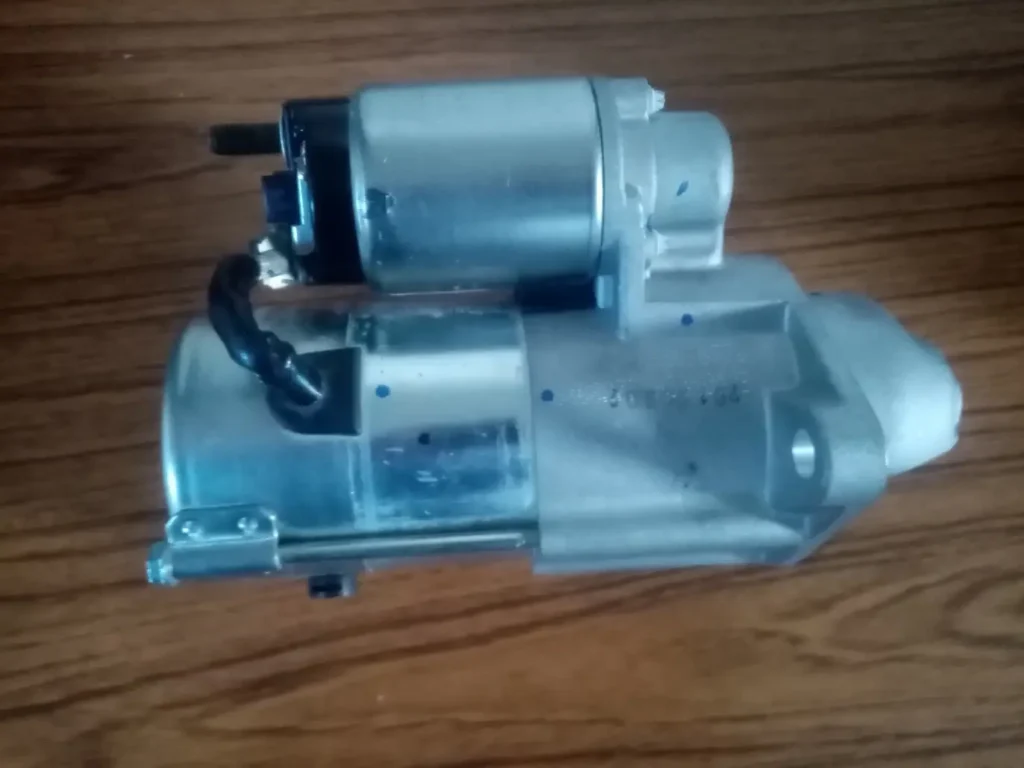
You turn the key. Click. One solid click, then nothing. Or maybe it cranks like it’s half asleep: ruh-ruh-ruh and finally catches. Or it grinds. Or it spins, but the engine never turns over.
Before you run out and buy a starter, take a breath.
I’ve seen plenty of starters replaced for no good reason. A weak battery. A crusty ground strap. A bad relay. An ignition switch. Even an anti-theft problem. All of them can fake a dead starter. Don’t be the guy who throws a $300 part at a $5 problem.
Let’s diagnose it properly.
Table Of Contents
Table of Contents
Where Is the Starter Located?
The starter lives where the engine and transmission meet. That’s because its whole job is to spin the flywheel or flexplate and get the engine turning.
On a lot of front-wheel-drive cars, you’ll find it low on the engine, near the transmission. On some vehicles, it’s buried under the intake manifold or stuffed somewhere you need three elbows and a prayer to reach.
The easiest way to find it? Follow the thick positive battery cable. It usually runs straight down to the starter or its main power lug.
But do yourself a favor: check the repair info for your exact vehicle before you start pulling anything. Starter locations move around a lot from model to model.
🔧 7 Common Car Starter Problems (Symptoms & Fixes)
A starter isn’t just one thing. Inside it, you’ve got brushes, bearings or bushings, the armature, the solenoid, and the drive gear. Any one of them can cause trouble.
1. Worn starter Brushes (Most Common Failure)

The carbon brushes carry current to the spinning part of the starter motor. As they wear down, the starter gets unreliable.
You might notice:
- It starts sometimes, then not others
- The starter turns slowly
- It works after several tries
- The problem gets worse over time
On some older or rebuildable starters, you can replace just the brushes. But don’t assume that’s your problem. Brush wear is only one possible cause of intermittent starting. Test the circuit first.
2. Bendix or Starter Drive Problems

The starter drive has to engage the flywheel when you turn the key. If it doesn’t, the starter motor can spin all day without actually turning the engine.
Signs of a bad drive:
- A spinning noise, but the engine isn’t cranking
- Grinding when you try to start it
- It engages sometimes, then misses
- The starter stays engaged after the engine starts
If the drive is damaged, replace it. And if you’ve been hearing grinding, inspect the flywheel or flexplate teeth too. Those don’t heal themselves.
3. Starter Solenoid Failure

The solenoid does two jobs: it switches the heavy current to the starter motor, and it shoves the starter drive into position.
When it fails, you often get a single click and no crank. Sometimes it’ll start after a few tries, then quit again later.
But here’s the thing: a single click does not automatically mean a bad solenoid. A weak battery or a bad connection can sound exactly the same. Check the simple stuff first.
4. Worn Starter Bushings
Some starters use bushings to support the armature. When they wear, the armature can drag inside the starter.
Possible symptoms:
- Slow, labored cranking
- Weird starter noise
- The starter gets hot
- It gets worse as it warms up
If the starter is rebuildable, bushings can sometimes be replaced. If not, it’s replacement time.
5. Starter Bearing Problems
Some starters use bearings instead of bushings. When a bearing goes bad, you’ll usually hear it before you feel it.
You may hear:
- Grinding
- Screeching
- A rough spinning sound
- A starter that sounds like it’s working way too hard
At that point, the starter needs rebuilding or replacing, depending on the design.
6. Worn Starter Motor
A tired starter motor usually shows up as slow or weak cranking.
The annoying part? A weak starter can sound almost exactly like a weak battery. That’s why I always check the battery and cables first.
If the battery is good, the connections are clean and tight, and the starter still cranks like it’s exhausted, then the starter moves up the suspect list.
7. Corroded or Loose Starter Connections
Don’t overlook the dumb stuff. It bites more people than anything else.
Corrosion at the battery terminals, starter cable, or engine ground can add enough resistance to starve the starter. It won’t get the current it needs, and it’ll act dead.
Look for:
- Crusty battery terminals
- Loose battery cables
- Damaged starter cables
- Bad engine-to-chassis grounds
- Intermittent starting
Clean it, tighten it, and sometimes that’s the whole fix. No parts needed.
Before Blaming the Starter, Check These 5 Things
When a car won’t crank, I don’t start by ordering a starter. I start here.
1. Check the Battery
Engine off, battery rested. A fully charged battery is usually around 12.6 volts.
A lower reading doesn’t automatically mean the battery is junk, but it means you need to dig deeper. And honestly, a proper load test is more useful than voltage alone.
2. Check the Battery Terminals
Look at both terminals. They should be:
- Clean
- Tight
- Free of heavy corrosion
While you’re there, check the negative cable and the engine ground. A good battery can’t push starter current through a bad connection.
3. Check the Starter Relay and Fuse
Depending on the vehicle, the starter circuit may have a fuse and a relay.
Check your fuse box diagram or owner’s manual. If the relay is the same type as another relay in the car, swapping them can sometimes help with diagnosis, but only if they’re genuinely compatible.
4. Check the Starter Control Wire
The solenoid gets a control signal when you turn the key or push the start button.
With a helper turning the key, you can check for voltage at the control terminal. If the signal isn’t reaching the starter, the starter itself may be fine. The problem is upstream.
5. Check the Engine Ground
A bad engine ground can cause slow cranking even when the battery looks good.
Inspect the ground cable between the battery, body, and engine. But for a real diagnosis, a voltage-drop test while cranking beats just staring at the cable.
How to Test a Starter Without Guessing
Here’s the basic logic I use.
Battery good + connections good + starter doesn’t operate
Check whether the starter is getting its control signal and main power.
Starter gets correct power and control signal but doesn’t crank
Now the starter is a strong suspect.
Starter cranks slowly
Don’t condemn it yet. Check:
- Battery condition
- Battery cables
- Engine ground
- Voltage drop
- Starter current draw, if you have the equipment
Starter spins but doesn’t turn the engine
Look at the starter drive and the flywheel or flexplate.
One click and nothing
Check battery and connections first. Then look at the solenoid and starter circuit.
That approach is a lot safer than replacing parts based on the sound alone.
How to Know the Starter Is Actually Bad
There’s no single symptom that proves a starter is dead.
You have to combine the symptoms with electrical tests.
If the battery is good, the cables and grounds are good, the starter receives the right signals, and it still won’t operate correctly, that’s strong evidence the starter itself is faulty.
If you have access to a proper starter tester or professional diagnostic gear, use it before buying an expensive replacement.
The goal is simple: prove the fault before replacing the part.
🧰 Starter Replacement Tips (From My 17 Years’ Experience)

If testing confirms the starter has to come out, take a few minutes before you start wrenching.
Before removing the starter:
- Disconnect the negative battery cable.
- Take a photo of the wiring before you touch it.
- Note where each cable goes.
- Make sure you have the correct replacement starter.
Some vehicles use starter shims or have specific mounting requirements. Don’t assume every starter installs the same way.
After installation, reconnect the wiring carefully and tighten the mounting bolts to spec. Then test it several times and listen for anything unusual.
Other Reasons Your Car Won’t Start
Not every no-start problem is a starter problem.
There’s a big difference between “the engine doesn’t crank” and “the engine cranks but won’t start.”
If the engine doesn’t crank:
Think about:
- Battery
- Battery terminals
- Ground connections
- Starter
- Starter relay
- Ignition/start switch
- Neutral safety switch or clutch switch
- Wiring
- Anti-theft system
If the engine cranks normally but won’t start:
The problem is probably somewhere else:
- Fuel delivery
- Ignition/spark
- Engine sensors
- Engine control system
- Security system
That distinction can save you a ton of time.
A Simple Starter Diagnostic Flow
Use this as a starting point.
Does the engine crank?
No
→ Check battery condition
→ Check battery terminals and grounds
→ Check starter fuse/relay
→ Check starter control signal
→ Test the starter
Yes, but very slowly
→ Check battery
→ Check cables and grounds
→ Perform voltage-drop testing
→ Check starter condition
Yes, but starter spins without turning the engine
→ Suspect the starter drive or flywheel/flexplate
Engine cranks normally but doesn’t start
→ Stop blaming the starter. Diagnose fuel, spark, security, and engine management.
What About Emergency Starting?
If the starter suddenly quits, your safest move is usually to get the vehicle somewhere safe or have a qualified tech look at it.
Some older vehicles can sometimes be temporarily started using methods techs use in specific situations. But those procedures involve moving vehicles, exposed electrical connections, or unexpected engine movement.
I don’t recommend experimenting with direct starter bypasses if you aren’t familiar with the starting circuit. If the car is in an unsafe spot, focus on safety first.
Starter Replacement Cost
The price depends heavily on the vehicle.
The starter itself varies a lot, and labor can be much higher on cars where the starter is buried.
As a rough starting point, you might see:
- Starter: around $150–$350
- Labor: around $200–$500
- Total: roughly $350–$850
These are broad estimates. Your vehicle, location, starter brand, and labor rate can change the final bill a lot.
Before approving the repair, ask whether the quote includes the starter, labor, taxes, and any extra parts.
FAQs About Car Starter Problems
How do I know if my starter is bad?
If the battery and connections are good and the starter receives the proper electrical signal but still won’t crank or cranks abnormally, the starter is a strong suspect.
Can a bad starter drain the battery?
A starter problem doesn’t normally drain the battery by itself. But repeated starting attempts can quickly kill a weak battery.
Will a bad starter cause a check engine light?
Usually, no. A starter problem doesn’t directly cause a check engine light. But a no-start condition can have other causes that do involve engine management.
How long does a starter last?
There’s no exact lifespan. It depends on the vehicle, driving conditions, how often you start it, and the health of the electrical system.
Can a bad battery sound like a bad starter?
Absolutely. Slow cranking and clicking are common with weak batteries. That’s why checking the battery first matters so much.
Final Thoughts
A car that clicks, cranks slowly, or suddenly refuses to start doesn’t automatically need a new starter.
Start with the basics: battery, terminals, grounds, fuses, relay, and the starter control circuit. If those check out and the starter still isn’t doing its job, then look closely at the starter itself.
That’s the approach I’d take in the garage too: test first, replace second.
It saves you money, saves you time, and keeps a simple electrical problem from turning into an unnecessary repair.
If you’re dealing with a starter problem right now, tell me your car’s year, make, model, engine, and exactly what happens when you turn the key. That’ll narrow it down a lot faster.
Pingback: Windshield Wiper Motor Problems? Expert Repair & Guide 2025
Pingback: Stuck Power Window? Car Window Motor Repair Made Simple
Pingback: Spark Plug Replacement Cost: The Ultimate 2025 Pro’s Guide
Pingback: Top 3 Reasons Your Car Won’t Start (But Battery Is Fine)